
Medical glove
Disposable gloves used to prevent cross-contamination in medicine and labs.

Guculen · CC BY-SA 4.0
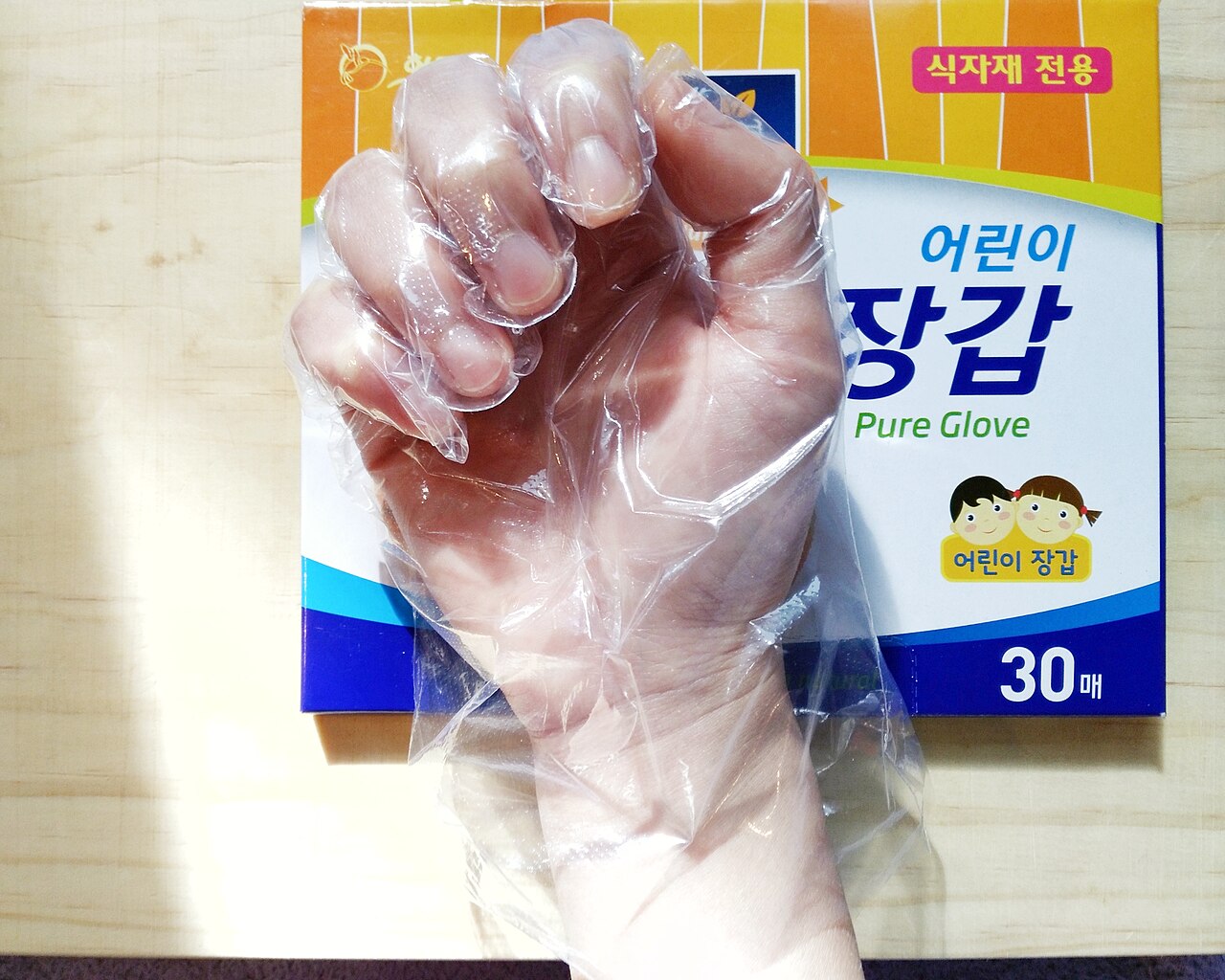
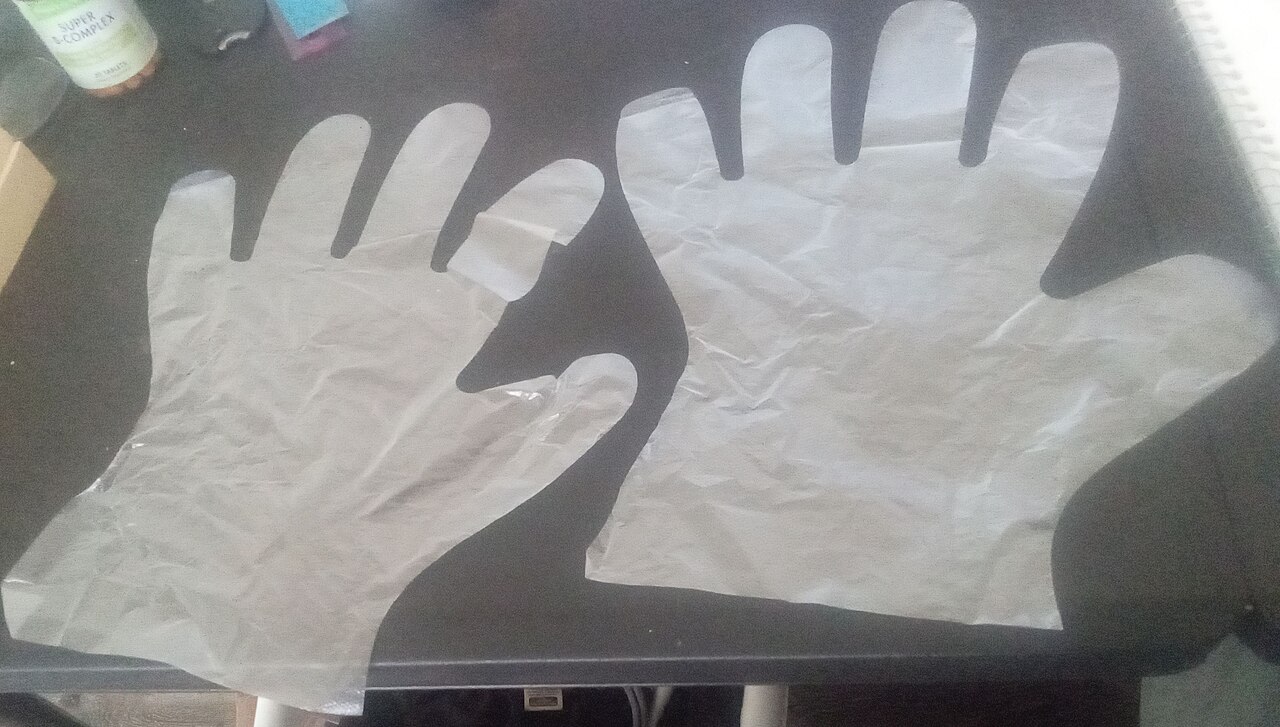
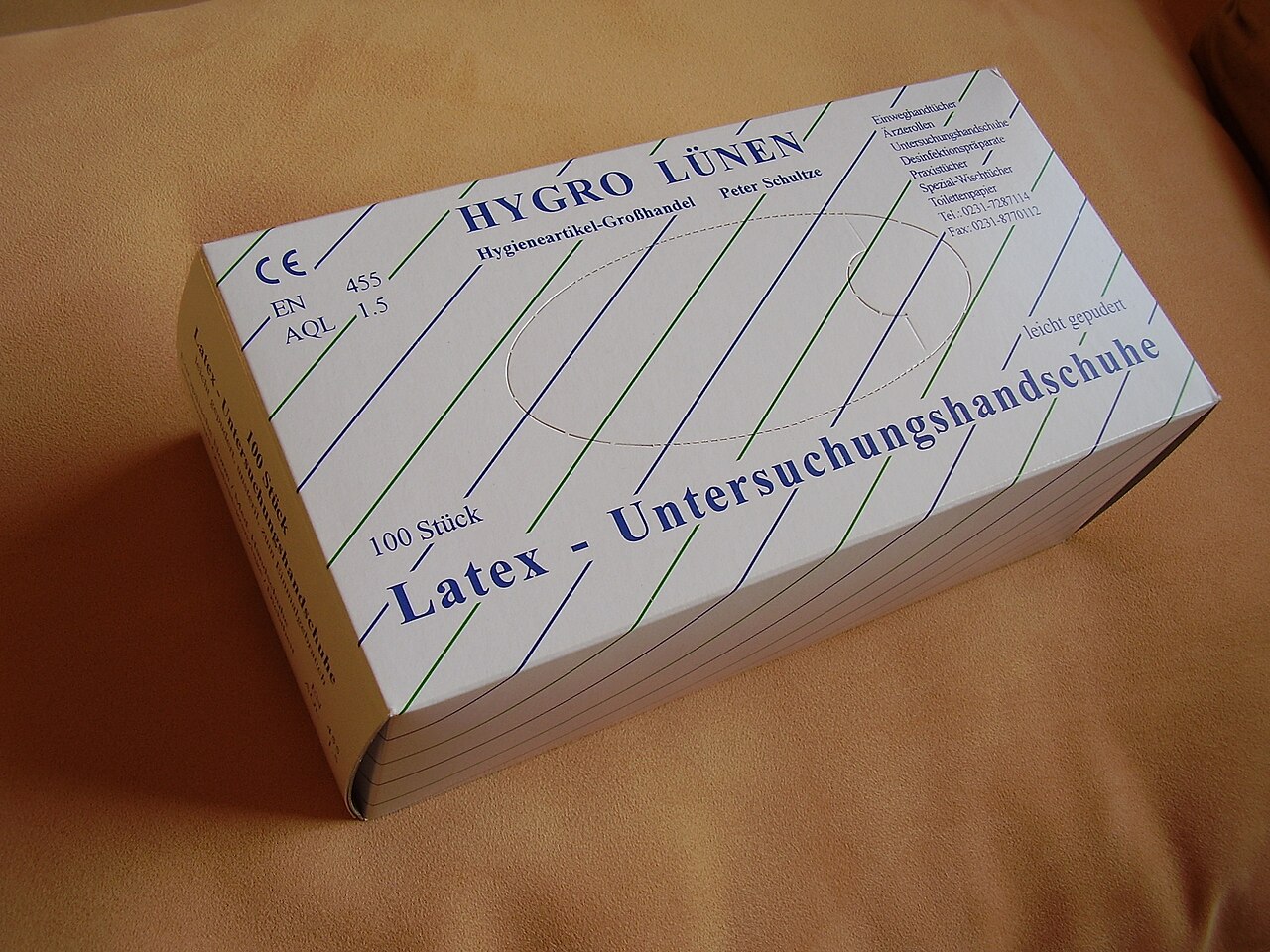
Medical gloves are disposable gloves used during medical examinations and procedures to help prevent cross-contamination between caregivers and patients. They are made of different polymers including latex, nitrile rubber, polyvinyl chloride and neoprene, and come unpowdered or powdered with corn starch. Their use reduces the risk of contamination of health-care workers' hands with blood and other body fluids, and reduces the risk of germ dissemination between patients and caregivers.
- inventor_company
- Ansell Rubber Co. Pty. Ltd.
- common_materials
- latex, nitrile rubber, polyvinyl chloride, neoprene
- market_value_2020
- USD 10.17 billion
- major_producer_2020
- Malaysia (about three-quarters of global production)
Lore & Background
William Halsted, soon-to-be her husband, asked the Goodyear Rubber Company to produce thin rubber gloves for her protection. The first modern disposable glove was invented by Ansell Rubber Co. Pty. Ltd. Medical gloves are used in chemical and biochemical laboratories for basic protection against corrosives and surface contamination, but they are easily penetrated by solvents and hazardous chemicals. Criminals have worn medical gloves during crimes due to their thinness and tight fit, though fingerprints may pass through as glove prints. Participants of the Watergate burglaries infamously wore rubber surgical gloves to hide their fingerprints. The majority are manufactured in South East Asia, with Malaysia accounting for about three-quarters of global production. Investigations in Malaysia, Thailand, and Sri Lanka documented severe labor rights violations, including debt bondage and passport withholding.
Reader's Guide
Medical gloves are a cornerstone of modern infection control, preventing cross-contamination in healthcare and laboratory settings. Their development from early rubber gloves for a nurse's skin reaction to mass-produced disposable items reflects the evolution of aseptic technique. Alternatives to latex, such as nitrile and polyvinyl chloride, have become widespread due to latex allergies, though latex remains preferred in surgery for its fine control. The industry's growth, particularly in Southeast Asia, has been shadowed by labor rights violations, leading to import bans and scrutiny. Double gloving is practiced to reduce infection risk. The gloves' use extends beyond medicine to laboratories and even criminal activity, highlighting their versatility and limitations.
Did You Know?
- Corn starch powder used in gloves can impede healing if it gets into tissues during surgery.
- Participants of the Watergate burglaries wore rubber surgical gloves to hide their fingerprints.
- In 2020, Malaysia accounted for about three-quarters of global medical glove production.
Origins: From a Nurse's Skin Reaction to the Disposable Glove
Medical gloves trace their roots to a personal health crisis at Johns Hopkins Hospital. In the winter of 1889 or 1890, Caroline Hampton, who had just become the chief nurse of the operating room when the hospital opened in 1889, developed a painful skin reaction to mercuric chloride, a chemical used for asepsis at the time. William Halsted, her soon-to-be husband, intervened by reaching out to the Goodyear Rubber Company to produce thin rubber gloves specifically to shield her hands. By 1894, Halsted had formalized the use of sterilized medical gloves across Johns Hopkins, embedding them into surgical practice. Yet the leap from reusable rubber to the modern disposable glove came much later. In 1965, Ansell Rubber Co. Pty. Ltd. introduced the first contemporary disposable glove, adapting the manufacturing technique originally developed for condoms. This innovation unlocked a vast range of clinical applications, from handling human excrement to routine dental procedures, and set the template for the disposable hand protection taken for granted in modern medicine.
Materials, Types, and the Precision of Sizing
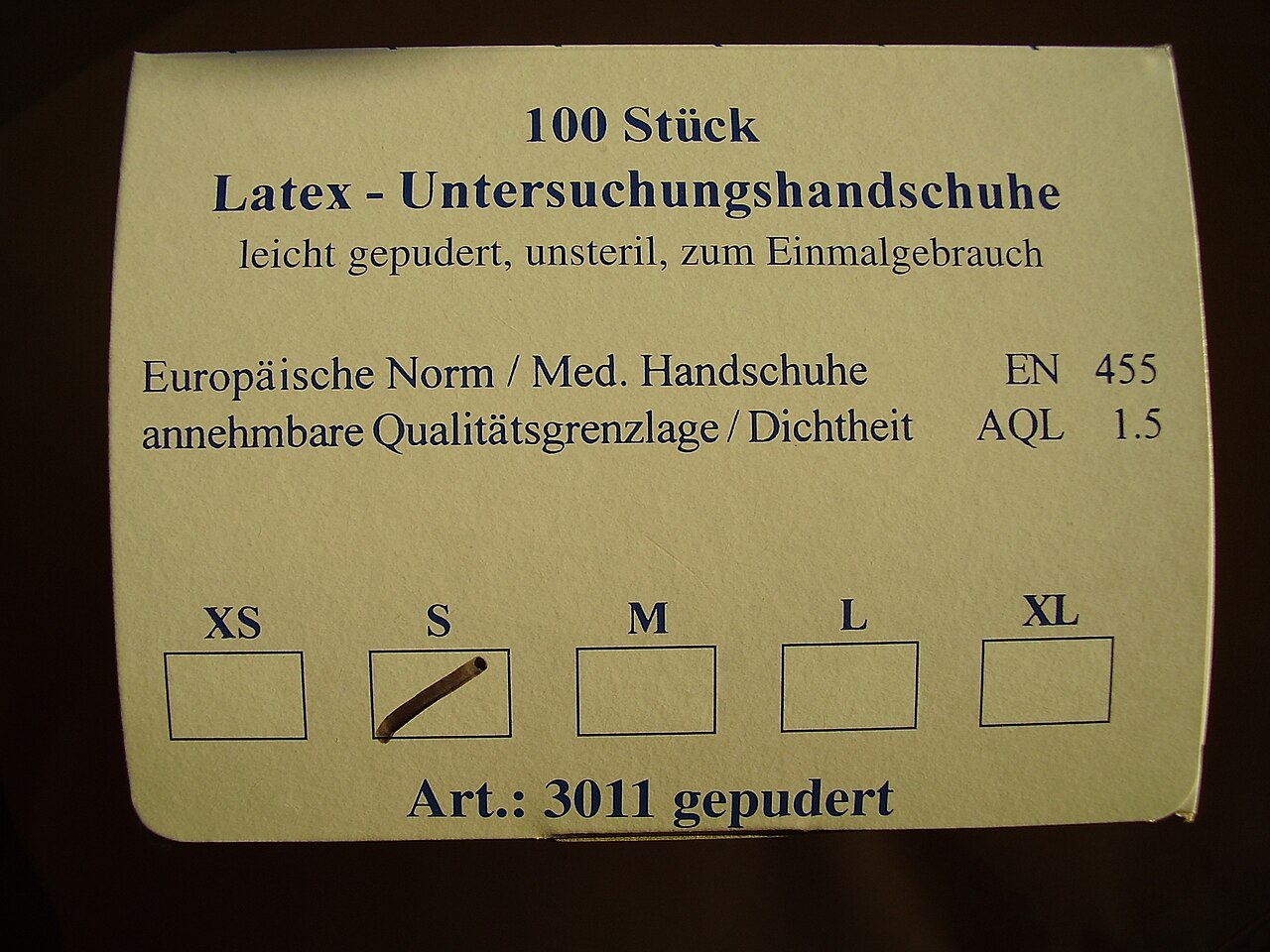
Medical gloves are manufactured from a variety of polymers, including natural latex, nitrile rubber, polyvinyl chloride, and neoprene, each offering different balances of flexibility and chemical resistance. The product line divides into two principal categories: examination gloves and surgical gloves. Examination gloves come in either sterile or non-sterile variants and are typically sized in broad increments—XS, S, M, L, with some brands extending to XL. Surgical gloves, by contrast, are held to a higher manufacturing standard, designed for superior precision and tactile sensitivity during extended procedures, and are generally supplied sterile. Their sizing is far more granular, measured as the circumference around the palm excluding the thumb in inches, typically ranging from 5.5 to 9.0 in half-inch steps, with a few brands offering a 5.0. Finding the correct fit can be a trial-and-error process, particularly for first-time users, since hand geometry varies widely. A thicker palm may demand a size above the measured value, while a slimmer hand may require one below. Research among American surgeons identified 7.0 as the most common size for men and 6.0 for women, underscoring how critical a well-fitted glove is to dexterity and comfort in demanding clinical work.
The Powder Controversy and the Push Toward Unpowdered Gloves
For decades, a fine powder was applied to the inside of medical gloves to make them easier to pull on. The earliest lubricants were derived from pine or club moss, but these proved toxic to the wearer. Talcum powder took over and remained the standard for many years, yet it was later linked to postoperative granuloma and unwanted scar tissue formation. Corn starch eventually replaced both the tissue-irritating lycopodium powder and talc as the preferred lubricant, but it too carried risks: if starch particles migrated into surgical wounds, they could trigger inflammatory reactions, granuloma, and impaired healing. Because of these concerns, unpowdered gloves became the preferred choice for surgery and other sensitive procedures, with manufacturers developing special processes to compensate for the absence of a lubricating agent. As non-powdered options became easier to don, pressure mounted to phase out powdered gloves entirely. By 2016, healthcare systems in both Germany and the United Kingdom had eliminated their use, and in March of that same year the U.S. Food and Drug Administration issued a formal proposal to restrict powdered medical gloves, marking a significant shift in how the industry approached hand protection.
A Ten-Billion-Dollar Industry Shadowed by Labour Abuses
The global medical glove market was valued at more than ten billion dollars in 2020, with analysts projecting roughly nine percent annual growth through 2028, driven in large part by rising demand in developing nations. Production is heavily concentrated in South East Asia; Malaysia alone accounted for approximately three-quarters of worldwide output in 2020. Yet this industrial dominance has come under intense scrutiny. Investigations in factories across Malaysia, Thailand, and Sri Lanka documented severe violations of human and labour rights. Migrant workers, often recruited through agencies in less affluent countries such as Nepal and saddled with high recruitment fees that trap them in debt bondage, make up the majority performing the hardest physical tasks. In some cases, employers withheld workers' passports, deepening their vulnerability. A 2010 report by the Swedish NGO Swedwatch on a Malaysian factory described twelve-hour days, seven days a week, with no overtime pay or payslips, management harassment, inadequate safety measures, and poor housing conditions. In response, from October 2019 to March 2020, the U.S. Department of Labor placed Malaysian-made medical gloves on its list of goods produced by child or forced labour and temporarily banned imports from Top Glove, the world's largest manufacturer at the time.
Gallery

Frequently Asked Questions
What is a medical glove?
A medical glove is a single-use barrier glove worn by healthcare workers during exams and procedures to stop the transfer of germs between patients and caregivers. They are designed to shield hands from blood, bodily fluids, and other contaminants.
What materials are medical gloves made from?
Medical gloves are manufactured from several polymers, including latex, nitrile rubber, polyvinyl chloride, and neoprene. They are available in both powdered (with corn starch) and unpowdered versions.
Who invented the medical glove?
The medical glove was developed by Ansell Rubber Co. Pty. Ltd., an Australian rubber manufacturing company. This invention introduced a practical disposable barrier for clinical settings.
Why are medical gloves important in healthcare?
They significantly lower the chance that a caregiver's hands become contaminated with blood or other body fluids during a procedure. They also cut down on the spread of microorganisms from one patient to another.
What is the global market and production landscape for medical gloves?
As of 2020, the worldwide medical glove market was valued at approximately USD 10.17 billion. Malaysia dominates production, accounting for roughly three-quarters of all medical gloves manufactured globally.
More in Personal Care And Hygiene 1-20
Spotted an error? Know more?
This is a living reference — every entry is fact-audited, and reader corrections feed straight into our audit queue. Suggest an edit · See this site's audit record